When a Tree Should Come Down
- Storm and Ice Damage: Split trunks, torn-out leaders and snapped crowns left by nor’easters, wet snow, ice or a Hudson River valley wind event.
- Emerald Ash Borer: Ash trees that are thinning from the top or shedding bark are often too brittle to climb safely, and they get worse fast.
- Decay and Structural Defects: Fungus at the base, hollow trunks, deep cracks or a lean that has changed.
- Trees Too Close to a Structure: Roots lifting a driveway or foundation, or a canopy resting on a roof or hanging over a service drop.
How a Removal Works
-
Site Visit and Written Estimate
We look at the tree, the drop zone, access for equipment and anything overhead, then give you a free estimate with clear pricing.
-
Rigging and Protection
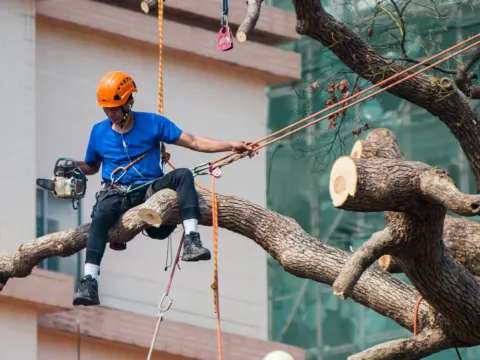
Where lawns or driveways need protecting, we put down ground protection. Rigging lines control every piece as it comes down.
-
Sectional Dismantling
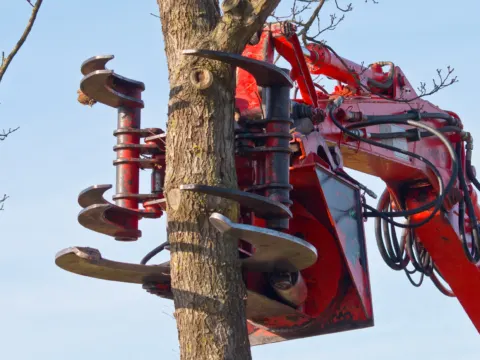
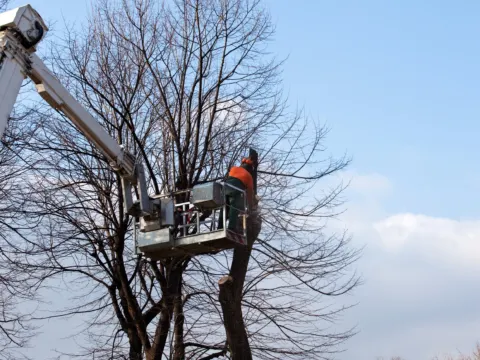
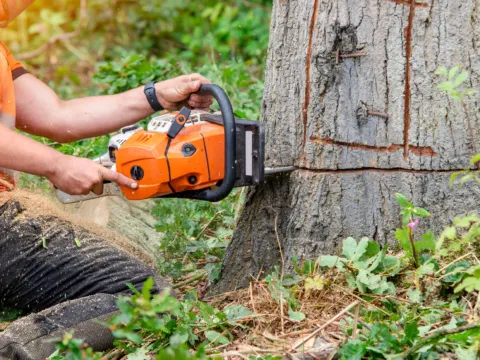
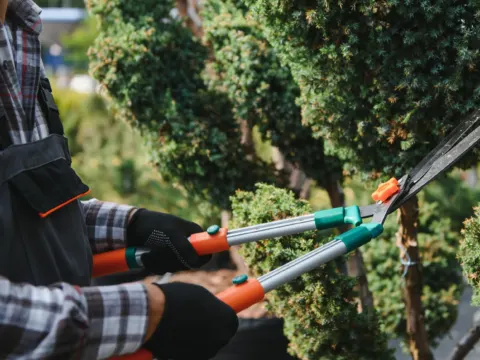
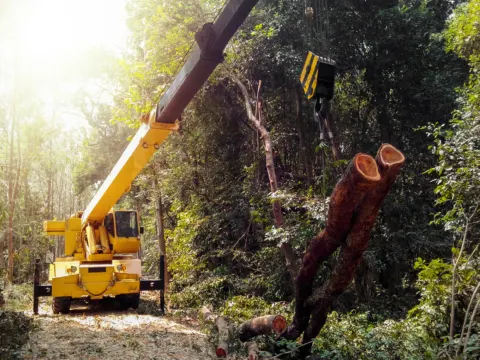
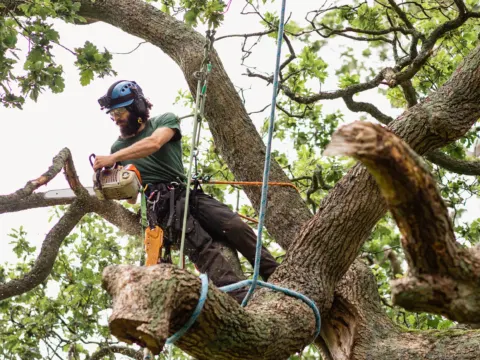
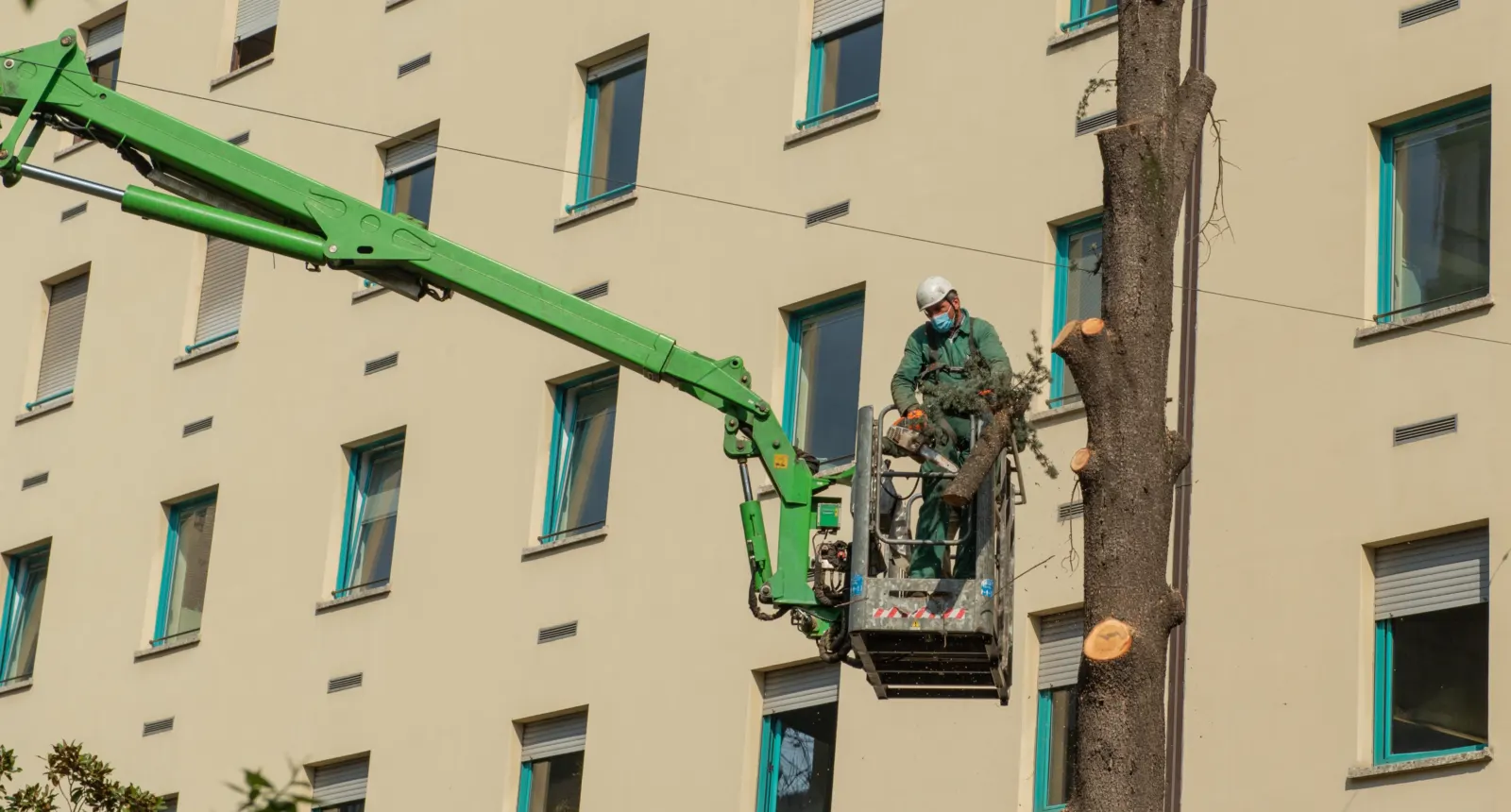
Climbers or bucket-truck operators take the tree apart limb by limb and then the trunk. A crane lifts the heavy pieces when there is no safe room to lower them.
-
Cleanup
Limbs are chipped, wood is hauled off or cut to length if you want it, and the work area is cleaned up before we leave.
Permits and Property Lines
Tree rules differ between the City of Poughkeepsie, each Dutchess County town and the villages inside them. Trees in the street right-of-way, and trees near wetlands, streams or steep slopes, can be regulated. Before we cut, we help you work out who owns the tree and whether your municipality needs a permit or notice. The owner remains responsible for confirming the requirements.