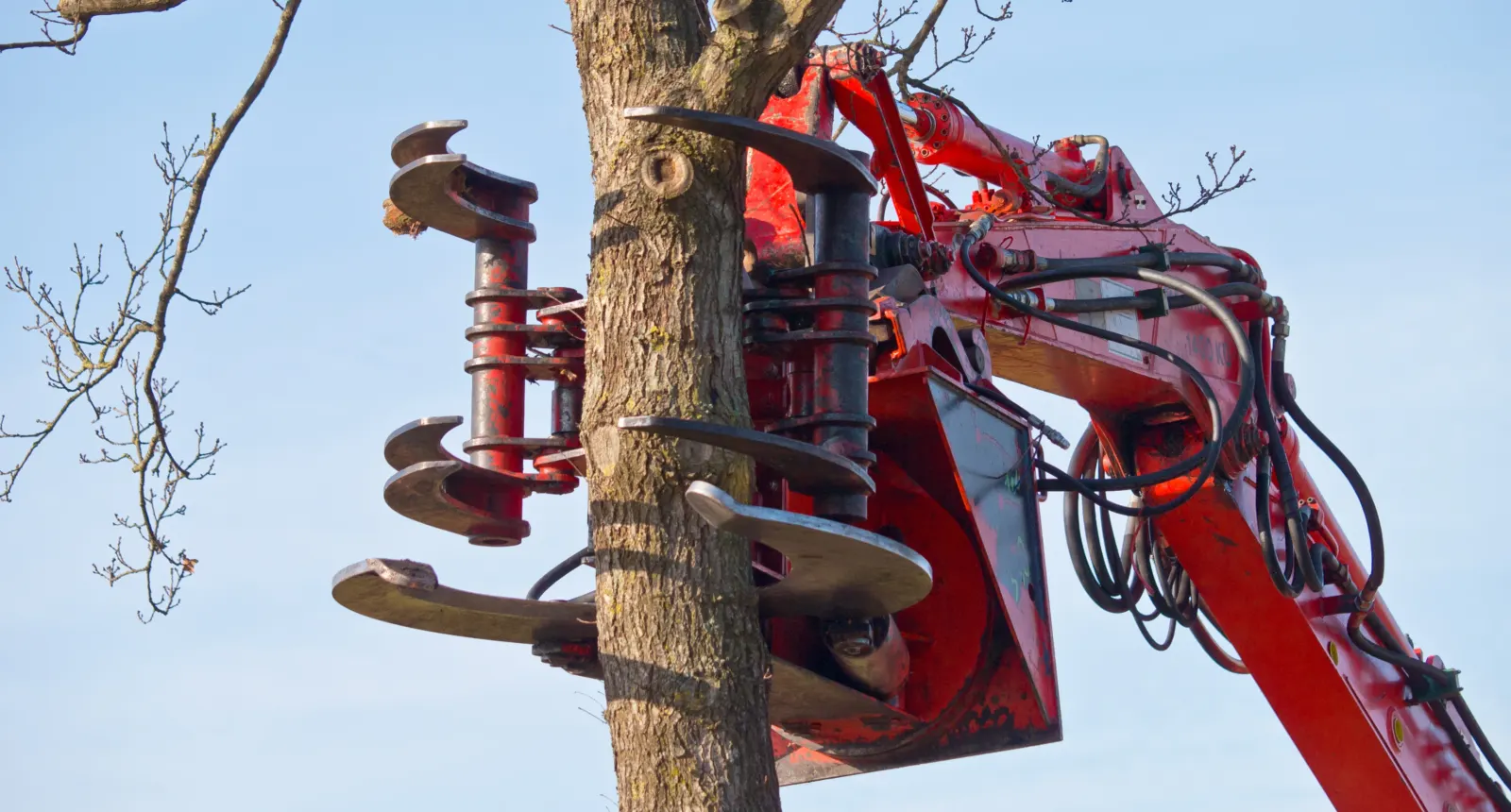
When a Crane Makes Sense
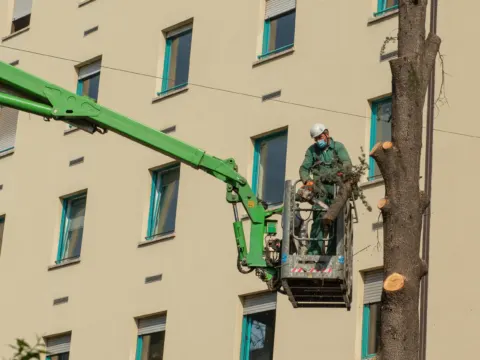
- Trees Over Structures: Large limbs or trunks above a house, garage, pool or deck, where a dropped piece could cause serious damage.
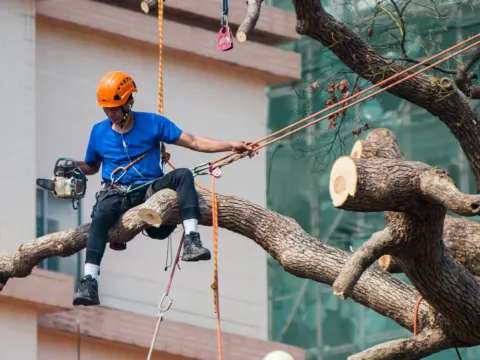
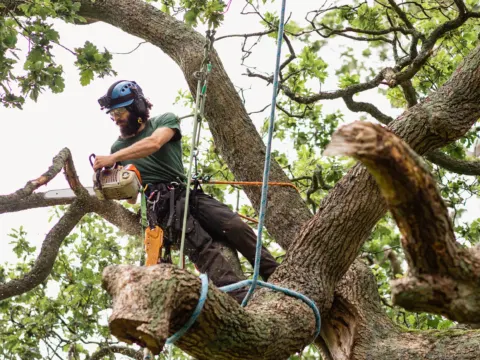
- Hazardous or Decayed Trees: Trees too weak to climb or to load with rigging forces.
- Limited Access: Backyards with narrow gates, tight driveways or no room to lower wood on the ground.
- Big Jobs on a Schedule: Large trees where lifting pieces out is much faster than lowering each one by hand.
How a Crane Removal Works
-
Site Review
We check the tree, the ground the crane will sit on, overhead lines and the route the equipment needs to take in.
-
Lift Plan
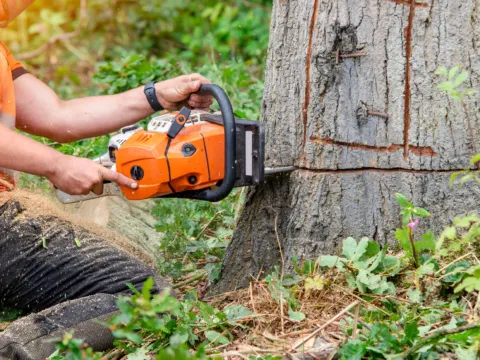
Cuts are sequenced so each piece is the right size for the crane, and the landing area is cleared.
-
Cut and Lift
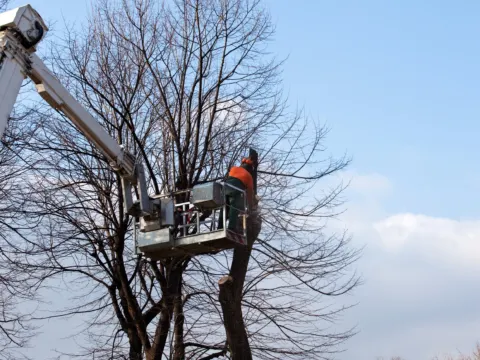
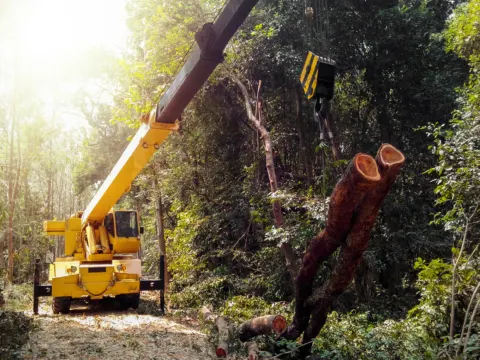
The arborist attaches each section to the crane before it is cut. The crane takes the load and lifts it clear.
-
Haul-Away and Cleanup
Wood is chipped or hauled, and the work area is cleaned up.
What We Need to Know First
A crane needs firm ground, room to set up and a clear path to the tree. Tell us about gates, septic systems, buried utilities and overhead lines when you call. We look at all of it during the site visit, and if a crane is not the right tool, we will say so and quote the better option.